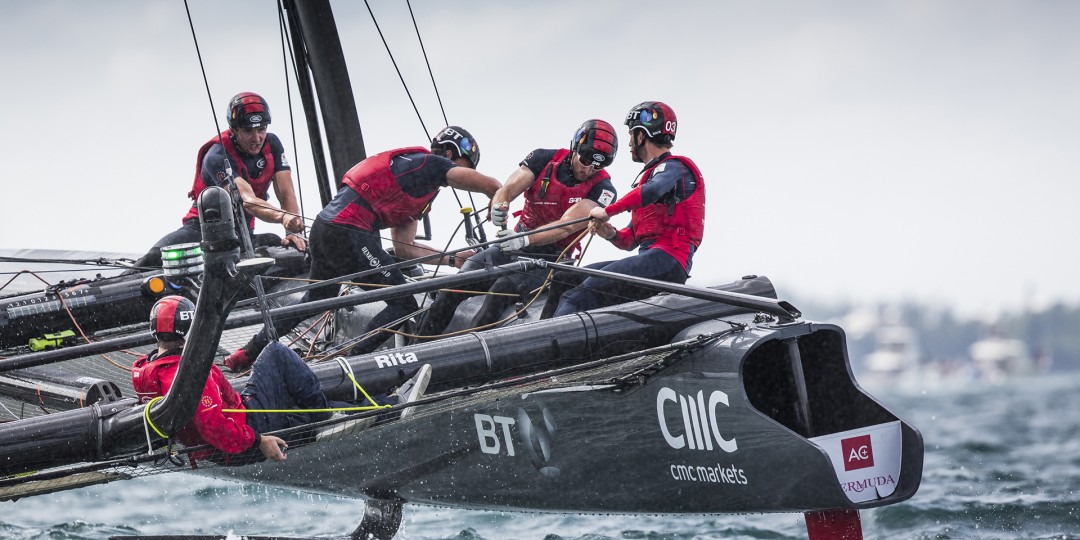
Sir Ben Ainslie is the most successful sailor in Olympic history. With four consecutive Olympic sailing gold medals behind him, he’s experienced the highest level of success, consistently. And now he’s attempting to lead a team (that he founded), Land Rover BAR (Ben Ainslie Racing), to victory in the Americas Cup – a sailing race (series) around the world that Great Britain, despite having launched the race in 1851, has never won. It is a momentous challenge.
And Sir Ben can’t do it on his own this time – he needs a highly skilled team around him of talented sailors, technicians, analysts – although he is in charge. He’s the skipper; the leader, the one spearheading the whole operation. But how do you lead the team to victory? What makes a successful leader?
We asked the man himself. These are the 9 habits that make Sir Ben a successful leader.
1. Believe in people
Sir Ben Ainslie: “In a single sport (like my Olympic sailing) you’re in control of everything and you live and die by your own decisions and efforts. In a team environment it’s very different – you rely on your teammates and you’re only as good as the team’s performance, not any one individual. The biggest thing I’ve learnt is that the critical part is the people. You need the best people you can possibly find. And you have to trust in them and delegate to them rather than micro-manage.
As the skipper, it is ultimately my obligation to keep the boat in good condition once it has departed the dock. But I never want to assume that I’m the best person in the world because we have wonderful people who make important decisions about the boat’s upkeep and when it’s docked, and we have very clearly defined roles for these various groups of people. You will eventually cease developing if you don’t delegate and do things your way or else.
2. Keep a cool head with your comms
We have five guys on the boat and are attempting to communicate under extremely stressful circumstances, therefore communication is essential when we are racing. Everyone is exerting a tremendous amount of physical effort, therefore communications must be brief and unambiguous since uncertainty causes the entire operation to collapse.
You won’t be able to have a casual conversation since the racing is so intense; the tempo does pick up. However, there must be a delicate balance between the tempo picking up and everyone knowing it and going too far and shouting angrily at one another, which causes communication to break down. Finding that balance is the key. When anything goes wrong or we fail at something, we do have certain tools to apply; we reset. We’ll start over. Simply pause, take a moment to regroup, and then resume how you normally sail a boat or manage a team, etc., is a terrific method to handle a meltdown situation in sport, business, or anything else.
3. Throw your frustation over the boat
“I’ve always been fairly hard on myself when I make a mistake or when I’m not happy with something, but in a team situation, I’ve had to learn to bottle that up because, especially in a leadership role, it doesn’t assist the other guys if the skipper is getting angry. It doesn’t assist everyone in performing their jobs as effectively as possible. Maintain your positive attitude, keep pushing yourself, and keep competing until you succeed.
4. Always have a plan
“I like to have a strategy and to be well-organized. As a leader, you must have that. If you don’t, someone else will, which may make you appear a little out of step. But it’s crucial, in my opinion, to discuss it with some of the guys nearby to check whether they totally support your goals. By doing this, you can maintain your motivation and focus on the reasons behind your actions. A very powerful and inclusive strategy to establish a team is to have that buy-in and include others.
5. Stick yer neck out
“There are some circumstances when you have to make decisions without including anyone else and it shows you’re willing to take those kind of decisions if they need to be taken. You don’t want to be seen as someone that can’t make a decision on their own and needs to feel like they’ve got everyone’s support on the tough decisions – you’ve got to be willing to stick your neck out when it counts.”
6. You don’t need confidence, you do need dedication
There are many various ways to exude confidence, but it’s crucial to demonstrate to others your commitment to the team’s success. I personally make it very clear to the team what our shared objective is, what is expected of us, and that in the event that something goes wrong, we will work together to resolve the situation. Avoid pointing fingers.
I can say with certainty that I’m not an extrovert. In today’s sports, the limelight is a must, but it’s something I’ve had to get used to. My perspective on it is that the team needs the profile, and I prefer to serve as an example for the team by demonstrating to them that we work incredibly hard but also allow our accomplishments speak for themselves. I make an effort to be as modest as possible, but obviously you require attention.
7. Take time to reflect
“At home, I recently became a parent, so that certainly helps put things in perspective. However, return to your family, leave your workplace, and take some time to consider what has transpired. Really, it’s only after that that you can reflect on what happened, put it behind you, and make the necessary adjustments.
8. Enjoy helping others
“Being a great leader has many responsibilities, including helping others. Instead of giving folks the hairdryer treatment, you assist them in overcoming their problem. Together, you resolve the issue over time and determine what adjustments are required. It’s not quite mentoring, but it’s very similar, and I’ve found that it can be a helpful method to deal with some problems. And you undoubtedly want to take care of and protect your folks.
9. Grit your teeth
“Having a bad day and feeling demotivated are unavoidable; I’ve experienced that my entire sporting career. There is no other choice but to press on while gritting your teeth. I believe that distinguishes effective teams from unsuccessful ones. In this campaign, we’ve experienced those times, and I believe it’s one of the most challenging aspects of leadership: you have to demonstrate that you remain committed to your vision and that we are still capable of doing it. We must continue to work hard and press forth. There isn’t another strategy that I’m aware of.

 Chityphong Alain Banchong - The Pursuit of Greatness